
by Amber Miller | Jun 22, 2026 | Blog, Business Development
Do you ever feel like you’re running a race where the finish line keeps moving? Between managing your team, keeping clients happy, and trying to find five minutes for a lunch break, the thought of adding “AI integration” to your to-do list might feel more like a burden than a blessing. You’ve heard the buzz, you know it’s powerful, but where do you even start without breaking your current systems (or your brain)?
The good news is that AI doesn’t have to be a massive, scary overhaul. In fact, for most of the small to medium-sized business owners we work with, the “easy way” is actually the most effective way. It’s about making your existing tools smarter so you can get back to the work only you can do.
At Smart To Finish Office Solutions, we believe in bridging the gap between strategy and execution. Let’s walk through how you can start integrating AI into your daily operations today: without the overwhelm.
Step 1: Start With Your “Busywork” Audit
Before you look at a single tool, take a breath and look at your week. What are the tasks that make you sigh when they pop up on your calendar? For most, it’s the repetitive admin, the constant back-and-forth of scheduling, or the struggle to keep up with meeting notes.
Instead of asking “What can AI do?”, ask “What do I hate doing?” When you frame it around solving specific pain points, the technology becomes a solution rather than a chore. Whether it’s drafting standard emails or organizing receipts, identifying these “low-value” tasks is your first step toward freedom.
Another helper that I absolutely love is the “Rule of Three.” Pick three tasks that take you more than two hours a week combined. That is your starting line. By focusing on just these three, you prevent the “shiny object syndrome” that often leads to abandoned software subscriptions.
Step 2: Clean Up Your Admin With “Invisible” AI
You don’t always need a brand-new app to start seeing the benefits of AI. In light of that, the easiest place to start is right inside the tools you already use every day. If you use Google Workspace or Microsoft 365, you likely already have access to powerful AI features that are just waiting to be turned on.
Meeting Notes That Actually Get Read
How many times have you finished a great call only to realize no one took notes on the action items? Tools like Otter.ai or the built-in AI assistants in Zoom and Teams can record, transcribe, and: most importantly: summarize your meetings. Imagine ending a call and having a tidy list of “Next Steps” delivered to your inbox five minutes later.
Email Drafting Without the Blank Page Stare
We spend an incredible amount of time staring at a blinking cursor. AI can help you draft those “standard” replies: like professional follow-ups or project updates: in seconds. You still provide the heart and the final check, but the AI does the heavy lifting of the first draft. It’s about saving your creative energy for the big decisions.
If you’re feeling like your inbox is a runaway train, our email audit services can help you get organized before you even plug in the AI.
Step 3: Streamline Your Customer Connection
Your customers want fast, accurate answers, but you can’t be awake 24/7. This is where AI management integration really shines. It allows you to maintain a high level of service without needing a massive support team on the payroll.
Smart Chatbots for FAQs
A simple AI chatbot on your website can handle the “Where is my order?” or “What are your hours?” questions instantly. This frees up your human team to handle the complex, sensitive issues that require empathy and deep problem-solving. It’s a win for the customer and a win for your sanity.
Replying to Reviews and Feedback
Staying active on Google or Yelp is vital for your reputation, but it’s time-consuming. AI can help you draft consistent, professional responses to your reviews. You can teach it your brand voice so that every “thank you” or “we’re sorry” sounds exactly like you.
For many of our clients, this is a game-changer. It ensures no customer feels ignored, even during your busiest seasons.
Step 4: Marketing That Doesn’t Drain Your Battery
Content is king, but creating it can feel like a full-time job. AI integration in your marketing isn’t about replacing your voice; it’s about amplifying it.
The “Drafting Assistant” Approach
Use AI to brainstorm 30 days of social media hooks or to turn a single blog post into five different newsletter blurbs. Instead of starting from scratch every Monday morning, you start with a buffet of ideas. You pick the best ones, tweak the wording, and you’re done in a fraction of the time.
Social Media Consistency
Consistency is the hardest part of marketing. With the right AI management, you can schedule posts that are optimized for when your audience is actually online. It takes the guesswork out of “When should I post this?” and ensures your brand stays top-of-mind without you having to stay glued to your phone.
Step 5: Tackling Operations and Finance
Numbers don’t lie, but they sure can be boring to track. Integrating AI into your operations and finances is the “secret sauce” for scaling without the mess.
Invoicing and Expense Tracking
AI can now “read” your receipts and invoices. Instead of manual data entry, you can use tools that automatically extract the date, vendor, and total and push them directly into your accounting software or a spreadsheet. No more shoeboxes full of paper!
Better Reporting with CRM Automation
If you use a CRM (Customer Relationship Management) tool, AI can help you spot trends you might have missed. Are clients dropping off at a certain stage of your funnel? AI can highlight those patterns so you can fix them before they become expensive problems.
We’ve helped many clients with CRM automation and setup to ensure their data is working for them, not against them. It’s all about having a clear picture of your business health at any given moment.
The 30-Day Pilot: The Smart Way to Scale
One mistake we see often is trying to change everything at once. This leads to team burnout and “system fatigue.” Instead, we recommend a 30-day pilot program for any new AI tool.
- Pick One Workflow: For example, just focus on “AI-generated meeting summaries.”
- Train a Small Group: Don’t roll it out to the whole company yet. Let one or two people master it.
- Review the Results: At the end of the month, ask: Did this save us time? Was the quality high?
- Scale or Pivot: If it worked, roll it out further. If it didn’t, drop it and try something else. No harm done!
This approach protects your team culture and ensures you aren’t paying for tools that nobody actually uses.
How Smart To Finish Makes It Easy
At the end of the day, AI is just a tool: it still needs a human touch to ensure it’s working toward your specific goals. That’s where we come in. At Smart To Finish, our AI management services are designed to take the technical weight off your shoulders.
We don’t just tell you which tools to use; we help you integrate them, train your team, and manage the output. We bridge that gap between the high-level strategy of “I want to be more efficient” and the ground-level execution of “How does this button work?”
Whether you need a fractional operations manager to oversee your systems or a dedicated virtual assistant to handle the daily tasks, we’re here to help you cross that finish line.
Are you ready to stop the “busywork” and start the “big work”? We’d love to hear about your unique challenges and see how we can streamline your operations together!

by Amber Miller | Jun 15, 2026 | Blog
Do you ever feel like AI was supposed to make your operations easier, but somehow everything feels a little more chaotic instead? Maybe you’ve added a few tools, tested a few automations, and now you’re wondering why your workflows still feel clunky. You are not alone!
Here is the truth: AI can absolutely help you run your business more smoothly, but only if it’s set up to support your real operations instead of adding more noise. We see it all the time here at Smart To Finish: business owners jump in with good intentions and end up with disconnected tools, inconsistent results, and more to manage than they had before.
If that sounds familiar, take a breath. Let’s walk through the seven most common mistakes you might be making with AI running your operations and, more importantly, how to fix them so your systems actually save you time.
1. Starting Without a Clear Strategy (The “Shiny Object” Syndrome)
The biggest mistake I see is “bolting on” AI just because it’s the trend of the month. You see a cool demo of a new automation tool and think, “I need that!” But without a clear business problem to solve, you’re essentially buying a high-tech hammer and going out in search of a nail.
In light of that, jumping in without a plan often leads to what experts call “pilot purgatory”: where you have a dozen little AI projects running, but none of them are actually moving the needle on your bottom line.
How to fix it:
Stop looking at the tools and start looking at your friction points. Ask yourself: “What is the one repetitive task that drains my team’s energy every single week?” Define one to three concrete use cases with clear success metrics: like reducing customer response time by 20%: before you even look at a software landing page.
2. Forgetting the “Human-in-the-Loop”
It is so tempting to think of AI as a replacement for staff, but that is a dangerous road to travel. AI is phenomenal at processing data and drafting content, but it lacks the nuance, empathy, and strategic context that only you and your team possess. If you remove human judgment entirely, you risk making cold, robotic decisions that can alienate your clients.
According to research from the U.S. Chamber of Commerce, the most successful businesses use AI to assist humans, not replace them.
How to fix it:
Adopt a “Draft, Review, Finalize” workflow. Use AI to create the first draft of an email or to summarize a long meeting, but always have a human (like a skilled virtual assistant) review the output for tone and accuracy. Keeping a “human-in-the-loop” ensures your brand voice remains authentic and your outputs are reliable.
3. Overlooking Data Security and Privacy
Are you or your team pasting sensitive client data into public AI chatbots? If so, you might be accidentally “leaking” your proprietary business info into the AI’s training model. This is a massive mistake that many small businesses underestimate until a privacy issue arises.
How to fix it:
Set a clear AI policy for your team. Be explicit about what data can and cannot be shared with external models. Use enterprise-grade versions of tools that offer data privacy guarantees, and always check the “opt-out” settings for data training. Protecting your intellectual property is just as important as the efficiency you gain.
4. Falling Into “Tool Overload”
I’ve met business owners who are paying for six different AI subscriptions that essentially do the same thing. One for transcription, one for meeting notes, one for drafting emails, and another for social media. Not only does this drain your bank account, but it also creates a fragmented workflow where your data is scattered across five different platforms.
How to fix it:
Audit your tech stack. Look for “all-in-one” solutions or tools that integrate deeply with the software you already use (like your CRM or project management tool). Another helper that I absolutely love is hiring an AI management expert to help consolidate your tools into a streamlined ecosystem.
5. Neglecting Proper Team Training
Handing a powerful AI tool to an untrained team is like handing a Ferrari to someone who doesn’t have a driver’s license. You’ll either end up with a crash or the car will just sit in the garage. Many leaders assume that because AI is “smart,” the team will just figure it out. In reality, this leads to frustration, misuse, and eventually, the team going back to their old, manual ways.
How to fix it:
Invest in role-specific training. Don’t just show them how to use the tool; show them how it fits into their specific daily workflow. Encourage your team to experiment and share “prompting” tips with each other. When your team feels confident, their productivity will skyrocket! If you’re looking for the right qualities in the people you hire to manage these tools, check out our thoughts on essential qualities for virtual support.
6. The “Set It and Forget It” Mentality
AI is not a slow cooker; you can’t just set it and forget it. AI models change, updates happen, and “hallucinations” (where the AI makes things up) can creep in over time. If you aren’t actively managing and auditing your AI outputs, the quality will eventually degrade.
How to fix it:
Treat AI management as an ongoing operational task. Schedule a monthly or quarterly audit of your automated workflows. Check your analytics: Is the AI still saving you time? Are the outputs still accurate? This iterative approach is what separates the scaling businesses from the ones that stay stuck.
7. Trying to Do Everything Yourself (The DIY Trap)
As a business owner, your time is your most valuable asset. Spending ten hours a week trying to figure out how to bridge the gap between two AI platforms is probably not the best use of your brilliance. Many entrepreneurs get stuck in the weeds of technical execution when they should be focusing on high-level strategy and growth.
How to fix it:
Know when to delegate. You don’t have to be the AI expert, the project manager, and the CEO all at once. Partnering with a team that specializes in operation support and AI management allows you to reap the benefits of high-tech automation without the headache of managing the back-end yourself.
Bringing It All Together
Running your operations with AI should feel lighter, not more complicated. And if you’ve recognized yourself in one or two of these mistakes, that’s actually a good thing: it means you can fix them before they keep draining your time, budget, or team energy.
When you focus on the right strategy, keep the human element in place, and treat AI like an operational tool instead of a magic shortcut, you can create systems that truly support your growth. That’s the goal! Sustainable, streamlined operations that help you scale without burning everyone out.
At Smart To Finish Office Solutions, we help business owners make AI practical, useful, and much easier to manage day to day. Whether you need a virtual assistant to keep things moving, hands-on operational support, or expert AI management to clean up the backend, we’re here to help you get your time back.
Have questions about how AI could work for your specific business? We’d love to chat! Reach out on our contact page to see how we can support your growth. Let’s get your operations working for you, not against you!
by Amber Miller | May 15, 2026 | Blog, Business Development
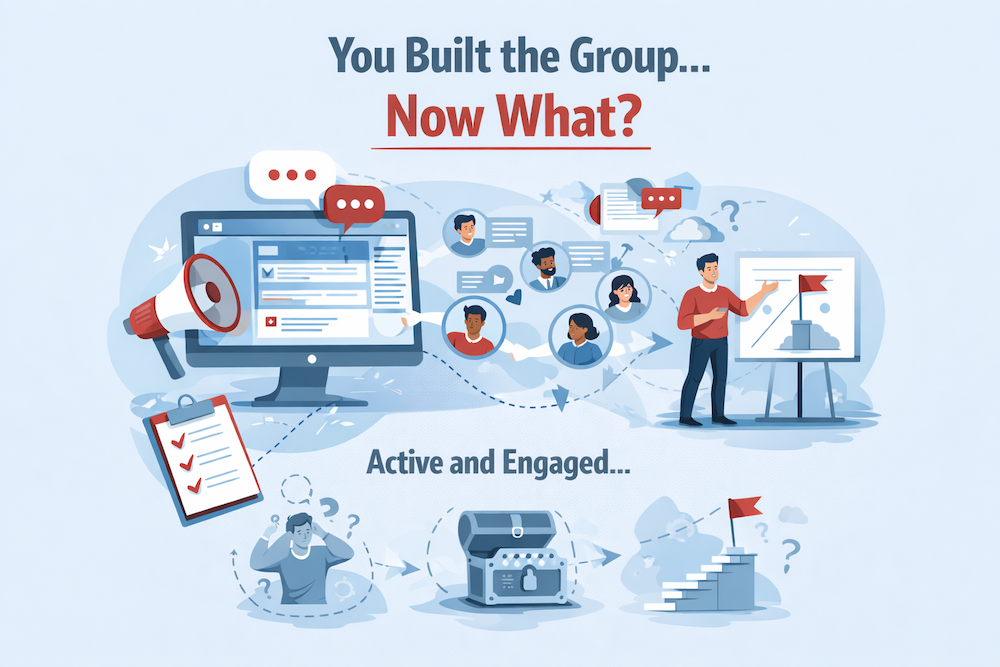
You Built the Group… Now What?
You’ve grown a Facebook group.
People are joining.
They’re engaging.
There’s conversation happening.
On the surface, it looks like success.
But when it comes to revenue, it’s unclear how the group actually contributes.
This is where most group-based businesses get stuck.
Because a Facebook group can be one of your most valuable assets or just another place to spend time.
Engagement Alone Doesn’t Equal Revenue
It’s easy to assume:
- People are active, so it’s working
- If I keep showing up, it will convert eventually
But engagement without direction doesn’t lead anywhere.
A group can be busy, supportive, and active and still not generate consistent revenue.
The difference is structure.
The Real Role of a Facebook Group
A Facebook group is not just:
- A place to connect
- A place to share
- A place to build community
It’s also:
- A trust-building environment
- A place to guide conversations
- A starting point for deeper support
When used intentionally, your group becomes the entry point into your ecosystem.
Why Most Groups Don’t Convert
Here’s where things typically break down:
1. No Clear “Start Here” Path
New members join and then what?
If there’s no clear direction:
- They scroll
- They read
- They leave
Without a simple “start here” experience, people never move beyond passive engagement.
2. Content Without Direction
Many group posts are:
- Relatable
- Engaging
- Valuable
But they don’t lead anywhere.
If your content isn’t guiding people toward a next step, it becomes entertainment instead of movement.
3. Avoiding Promotion Entirely
A lot of group owners avoid mentioning offers because they don’t want to feel:
So they don’t promote at all.
But without introducing next steps, your audience doesn’t know how to go deeper.
Clear direction is not pushy. It’s helpful.
4. Inconsistent Structure
If posting is:
- Random
- Reactive
- Based on time or mood
Your group will feel inconsistent.
Consistency doesn’t mean volume.
It means having a rhythm that people can rely on.
What to Do Instead
You don’t need to post more.
You need to post with intention.
Start here:
- Create a simple “start here” pathway for new members
- Use a mix of engagement, authority, and direction-based posts
- Tie conversations back to real problems your audience is experiencing
- Introduce next steps naturally and consistently
- Maintain a steady posting rhythm
When your group has structure, people move through it instead of just sitting in it.
What “Not Salesy” Actually Looks Like
Being salesy is not the problem.
Being unclear is.
Instead of:
- Random promotions
- Hard sells
- Constant pitching
Focus on:
- Helping people understand their next step
- Showing them what support looks like
- Connecting content to solutions
When done well, it doesn’t feel like selling.
It feels like guidance.
The Shift That Changes Everything
Your group stops being just a community when:
- People know where to start
- Content leads somewhere
- Conversations have direction
- Next steps are clear
At that point, your group becomes:
- A lead generator
- A trust builder
- A conversion pathway
If your Facebook group is active but not contributing to revenue, it’s not a growth problem.
It’s a structure problem.
With the right direction, your existing group can become one of the most effective parts of your business.
If you’re not sure how to structure your group to support engagement and conversion, this is exactly the kind of work we support at Smart to Finish—bringing clarity, consistency, and direction so your group actually drives results.

by Amber Miller | May 8, 2026 | Blog, Business Development
You Have a List… But It’s Not Converting
You’ve built an email list.
People have opted in.
They’ve shown interest.
But when it comes to revenue, it feels underwhelming.
You send emails occasionally.
You share updates or content.
And still, it doesn’t translate into consistent sales.
This is one of the most common gaps we see.
And it’s rarely because your list is bad.
The Problem Isn’t the List
Most people assume:
- My list isn’t big enough
- My audience isn’t ready
- Email just doesn’t work for my business
But in most cases, the issue isn’t the list.
It’s how the list is being used.
What’s Actually Going Wrong
Here are the most common reasons email isn’t generating revenue:
1. Inconsistent Sending
If you only email when you:
- Have something to sell
- Remember to send something
- Feel like you should
Your audience never builds familiarity with you.
And without consistency, there’s no momentum.
People don’t engage because they don’t expect to hear from you.
2. No Clear Purpose Behind Emails
Many emails fall into the category of:
- Updates
- General value
- Random thoughts
But they’re not tied to a larger goal.
Every email should have a role:
- Build connection
- Reinforce a problem
- Guide toward a next step
Without that, emails get opened and forgotten.
3. No Connection to Offers
You might be:
- Sharing helpful content
- Educating your audience
- Providing value
But if you’re not clearly connecting that to an offer, people won’t take the next step.
Your audience shouldn’t have to figure out how to work with you.
You need to show them.
4. Lack of Segmentation
Not everyone on your list is in the same place.
Some people:
- Just joined
- Are highly engaged
- Are ready to take action
If everyone gets the same message, it won’t land for most people.
Segmentation doesn’t have to be complex.
But it does need to exist.
5. No Follow-Up System
One email rarely converts someone.
People need:
- Repetition
- Reinforcement
- Time
If you’re not following up:
- After someone clicks
- After someone engages
- After someone shows interest
You’re missing opportunities that were already started.
What to Do Instead
You don’t need to send more emails.
You need to send more intentional emails.
Start here:
- Send consistently, even if it’s simple
- Give each email a clear role and direction
- Connect your messaging to a specific next step
- Group your audience based on behavior or engagement
- Create simple follow-up sequences
These changes don’t require a full rebuild.
But they make a significant difference.
The Shift That Changes Email Performance
Email works when it becomes part of a system.
When:
- Your content leads into email
- Your email leads into an action
- Your systems support that action
It stops being just communication.
And starts becoming a revenue channel.
If your email list isn’t generating consistent results, it’s not something you need to abandon.
It’s something you need to structure.
With the right consistency, direction, and follow-up, your existing list can become one of your most reliable sources of revenue.
If you’re not sure what’s missing in your current email strategy, this is exactly the kind of work we support at Smart to Finish—bringing clarity, structure, and execution so your email actually drives results.

by Amber Miller | May 1, 2026 | Blog, Business Development
Everything Is Being Done… But Nothing Is Moving
You have a team.
You have tools.
You have content going out.
On paper, things are happening.
But behind the scenes, it feels like:
- Things get started but not finished
- Tasks fall through the cracks
- No one is quite sure what’s working
- Progress feels inconsistent
This isn’t a talent problem.
It’s an ownership problem.
The Hidden Gap in Most Businesses
Most businesses don’t lack people.
They lack someone who is responsible for:
- Connecting the pieces
- Setting direction
- Making sure things actually move forward
Instead, work is spread across:
- VAs
- freelancers
- internal team members
Everyone is doing their part.
But no one is responsible for how it all works together.
Execution Without Ownership Doesn’t Scale
You can have:
- Great content
- Strong offers
- A capable team
But without ownership:
- Strategy gets diluted
- Priorities shift constantly
- Execution becomes reactive
- Results stay inconsistent
Because no one is steering the system.
What “Ownership” Actually Means
Ownership doesn’t mean doing everything.
It means someone is responsible for:
- What’s being prioritized
- How pieces connect
- What happens next
- Whether something is working or not
It’s the difference between:
- Tasks getting done
- And outcomes being achieved
How This Shows Up in Real Life
If no one owns your marketing and operations, it often looks like:
- Content is being created, but not tied to offers
- Emails go out, but don’t connect to a larger plan
- Systems exist, but aren’t optimized or maintained
- Opportunities are identified, but not implemented
Nothing is completely broken.
But nothing is fully working either.
Why Hiring More People Doesn’t Fix It
When things feel stuck, the instinct is to:
- Hire another VA
- Bring in another specialist
- Add more support
But more people doesn’t solve a lack of ownership.
In fact, it often makes it worse.
More people = more moving parts
Without ownership = more disconnection
What Actually Moves the Needle
The shift happens when someone takes responsibility for:
- How everything connects
- What gets prioritized
- What gets implemented
- And how it all ties back to revenue
This creates:
- Clarity
- Consistency
- Momentum
And most importantly, results.
The Difference You Can Feel
When ownership is in place:
- Things don’t stall
- Decisions get made faster
- Systems improve over time
- The team becomes more effective
Instead of managing people, you’re moving the business forward.
If your business feels like a lot is happening but not much is improving, it’s worth asking:
Who actually owns this?
Because until someone does, things will continue to move—but not necessarily forward.
This is exactly where we support clients at Smart to Finish—bringing ownership, structure, and direction to the pieces you already have so they start working together and driving results.

by Amber Miller | Apr 24, 2026 | Blog, Business Development
If You’re Getting Attention But Not Results
You’re showing up.
You’re posting.
You’re sending emails.
People are engaging.
But revenue still feels inconsistent.
This is one of the most common patterns we see.
And it usually comes down to one thing:
Your revenue isn’t missing. It’s leaking.
The Problem Isn’t Always What You Think
When revenue feels off, most businesses assume they need:
- More traffic
- More content
- More offers
But in many cases, you already have enough attention.
The issue is what happens after someone engages.
Or more accurately, what doesn’t happen.
Where Revenue Typically Leaks
Here are the most common breakdown points we see:
1. No Clear Next Step
Someone reads your post.
They open your email.
They listen to your podcast.
And then nothing.
There’s no clear direction for what to do next.
When that happens, even interested people disengage.
Attention without direction doesn’t convert.
2. Weak or Broken Intake Experience
Let’s say someone does take the next step.
They:
- Fill out a form
- Take an assessment
- Request more information
But the experience is:
- Confusing
- Slow
- Disconnected
Or there’s no follow-up at all.
This is one of the biggest hidden leaks.
People who were ready lose momentum and drop off.
3. Content and Offers Aren’t Connected
Your content might be strong.
Your offers might be valuable.
But if they aren’t clearly connected, people won’t bridge that gap on their own.
For example:
- You’re educating, but not directing
- You’re engaging, but not guiding
- You’re providing value, but not offering a next step
Your audience shouldn’t have to guess how to work with you.
4. Inconsistent Follow-Up
Even when someone shows interest, what happens next matters.
If:
- Emails are inconsistent
- Messages aren’t reinforced
- There’s no system for follow-up
You lose opportunities that were already in motion.
Most conversions don’t happen on the first interaction.
Without follow-up, you’re leaving revenue on the table.
5. Disconnected Systems
This is the quiet one.
Your:
- Content
- Email
- Forms
- CRM
- Team
aren’t fully aligned.
So even when everything exists, it doesn’t function as a system.
And when things aren’t connected, things fall through the cracks.
How to Start Fixing It
You don’t need to rebuild your business.
You need to tighten what’s already there.
Start here:
- Make sure every piece of content leads somewhere
- Simplify and test your intake or assessment experience
- Connect your messaging to your offers more clearly
- Ensure there is consistent follow-up
- Look at your systems as one flow, not separate tools
Small improvements in these areas can create a big shift in results.
The Shift That Changes Everything
Revenue doesn’t come from doing more.
It comes from reducing friction.
When:
- Your audience knows what to do next
- Your systems support that action
- Your follow-up keeps things moving
You stop losing people along the way.
And your existing audience starts converting at a higher rate.
Final Thought + CTA
If your business feels busy but not consistently profitable, it’s not always because something is missing.
It’s often because something is leaking.
Fix the gaps, and your existing efforts will start working the way they’re supposed to.
If you’re not sure where your revenue is leaking, this is exactly the kind of work we support at Smart to Finish—identifying breakdown points, improving systems, and connecting the pieces so your business actually converts.
by Amber Miller | Apr 17, 2026 | Blog, Business Development
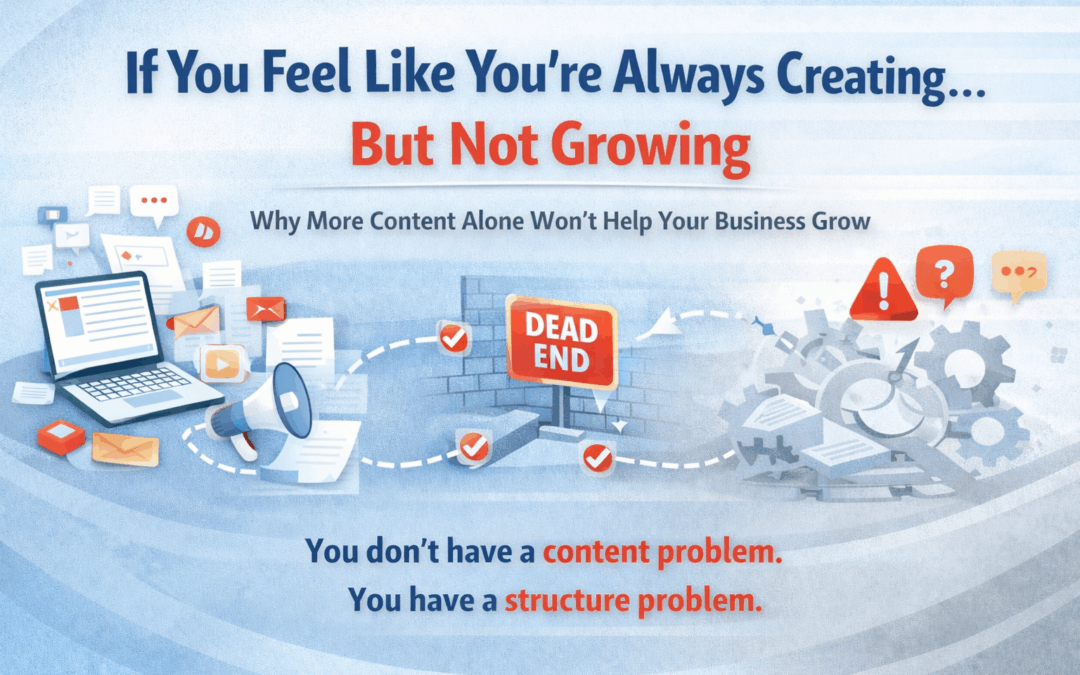
If You Feel Like You’re Always Creating… But Not Growing
If you’re constantly:
- Posting
- Writing emails
- Creating content
…but not seeing consistent growth or revenue…
You don’t have a content problem.
You have a structure problem.
The Trap Most Businesses Fall Into
When things aren’t converting, the default reaction is:
- “We need to post more.”
- “We need to show up more.”
- “We need more content.”
So you create:
- More social posts
- More emails
- More blogs or videos
But nothing really changes.
Because more content doesn’t fix what’s actually broken.
Content Without Direction Is Just Activity
Content by itself doesn’t generate revenue.
It creates:
- Awareness
- Engagement
- Visibility
But without direction, it stops there.
If your content isn’t leading somewhere, it’s just being consumed—not acted on.
What You Actually Need
Instead of more content, you need:
1. A Clear Path Forward
Every piece of content should answer:
“What should someone do next?”
That could be:
- Join something
- Take an assessment
- Book a call
- Start with a resource
If there’s no next step, there’s no movement.
2. Connected Systems
Your content, email, and backend systems need to work together.
That means:
- Posts lead to something specific
- Emails reinforce that direction
- Your systems (forms, funnels, intake) support the experience
When these are disconnected, people drop off.
3. Consistent Execution
Even the best strategy won’t work without consistency.
Not more volume—just:
- Intentional posting
- Consistent messaging
- Reliable follow-through
This is what builds momentum over time.
Why More Content Usually Makes It Worse
When you add more content without fixing structure:
- Messaging becomes inconsistent
- Your audience gets mixed signals
- Your team gets overwhelmed
- Important pieces fall through the cracks
You end up doing more… with less return.
What to Do Instead
Before creating anything new, pause and ask:
- Where does our current content lead?
- Is there a clear “start here” path?
- Are we reinforcing the same next step across platforms?
- Are our systems actually working once someone takes action?
If the answer isn’t clear, that’s where to focus.
The Shift That Changes Everything
The goal is not:
“Create more content”
The goal is:
“Make your content work together”
When:
- Your messaging is aligned
- Your systems are working
- Your audience knows what to do next
Content stops being noise—and starts driving results.
Final Thought
If your business feels busy but not productive, it’s rarely because you’re not doing enough.
It’s because what you’re doing isn’t connected.
Fix the structure—and your existing content will start working harder for you.
If you’re not sure where the disconnect is, this is exactly the kind of work we support at Smart to Finish—bringing structure, clarity, and execution to the pieces you already have so they actually drive results.
by Amber Miller | Apr 10, 2026 | Blog, Business Development
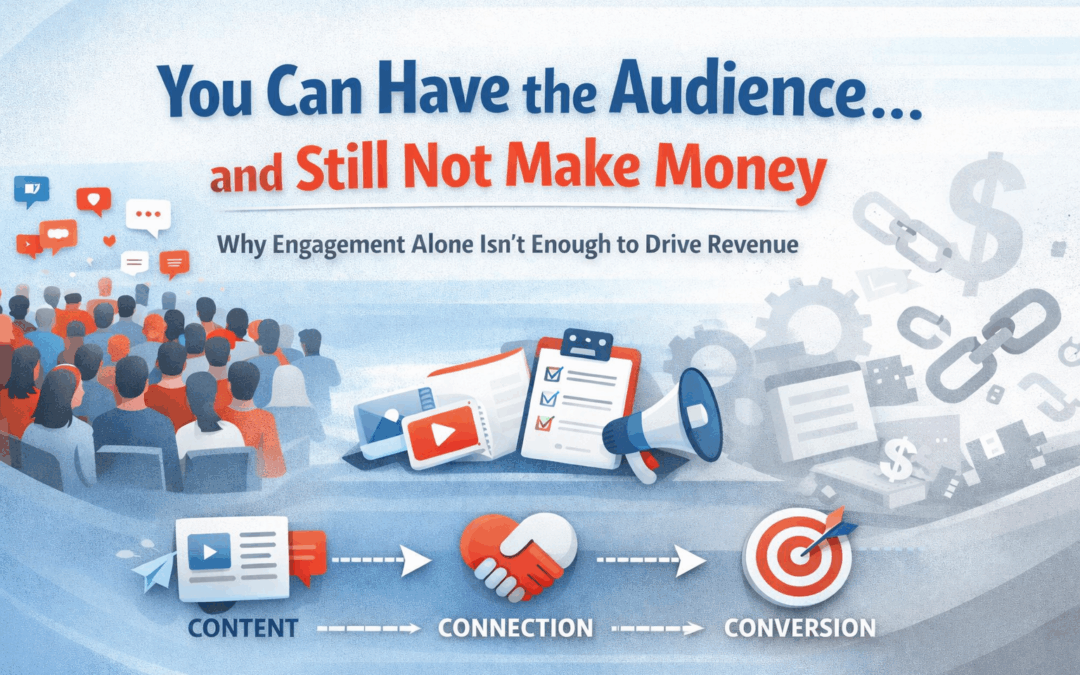
You Can Have the Audience… and Still Not Make Money
You can have a large audience.
You can have content, offers, and even a team.
And still feel like nothing is really converting.
We see this all the time.
On the surface, everything looks like it’s working:
- A growing or active audience
- Consistent content
- A product or service to offer
But behind the scenes, there’s no clear connection between those pieces.
And without that connection, revenue stays inconsistent.
The Illusion of “Having Everything in Place”
Many businesses reach a point where they believe they have what they need:
- A Facebook group or social audience
- An email list
- Content like blogs, podcasts, or posts
- An offer or service
But those elements alone don’t create revenue.
They create activity.
Revenue comes from how those pieces work together.
What’s Actually Missing
In most cases, the issue isn’t traffic or effort.
It’s structure.
More specifically, it’s a lack of:
- Clear ownership
- Consistent execution
- A defined path from engagement to conversion
Content is being created.
People are engaging.
But there’s no system guiding them toward a next step.
The Missing Link: Connection
For a business to monetize consistently, there needs to be a clear flow:
Content → Connection → Conversion
- Content brings people in
- Connection builds trust and relevance
- Conversion happens when there is a clear next step
Without that flow, even strong engagement won’t translate into revenue.
What This Looks Like in Practice
Instead of asking:
“How do we create more content?”
The better question is:
“Where are we directing people next?”
Here’s what we typically look at:
- Is your content leading somewhere, or just being consumed?
- Are your emails reinforcing next steps, or just sharing information?
- Is there a clear “start here” pathway for new people?
- Are your systems (forms, funnels, intake) actually working smoothly?
When these pieces are aligned, small changes create meaningful results.
It’s Not About Doing More
This is where many businesses get stuck.
They assume the answer is:
- More posts
- More emails
- More offers
But more activity doesn’t fix a disconnected system.
In fact, it often makes things more confusing.
The goal is not to do more.
It’s to connect what already exists.
Where Revenue Actually Comes From
Consistent revenue comes from alignment.
When:
- Your content points to a clear next step
- Your systems support that step
- Your audience knows what to do next
Everything starts working together.
Engagement becomes direction.
Direction becomes action.
Action becomes revenue.
The Real Question to Ask
If your business feels busy but not profitable, ask yourself:
Do we have a clear path from attention to conversion—or are we just creating activity?
Because in most cases, the opportunity isn’t to build something new.
It’s to make what you already have work together.
If you’re not sure where your gaps are, this is exactly the kind of work we help clients with at Smart to Finish—bringing structure, clarity, and execution to the pieces you already have so they actually drive results.

by Amber Miller | Oct 30, 2025 | Blog
Fall 2025 has brought new pressure on email deliverability. Google, Yahoo, and Microsoft have all tightened standards that determine whether messages reach the inbox or get filtered out before a subscriber ever sees them. The changes are not always obvious, but the effects are already visible in declining inbox placement for companies that do not prioritize list hygiene and engagement.
For businesses that rely on email nurturing, a healthy sender reputation is now the deciding factor in visibility, performance, and long-term revenue. Here is what has changed, what inbox providers care about, and how CRMs are adapting behind the scenes.
What’s New Since Last Quarter
New This Fall 2025:
- Microsoft has joined Google and Yahoo on deliverability standards
- Gmail now flags unauthenticated bulk mail in mobile view with a red warning badge.
- Yahoo and AOL expanded the definition of “bulk sender” to 1,000 emails per day.
- Microsoft is testing “trusted sender tiers” based on DKIM alignment and engagement.
Inbox Provider Priorities this Quarter
| Provider |
Authentication Requirements |
Engagement Weight |
| Google |
SPF, DKIM, DMARC required |
Very High |
| Yahoo/AOL |
Full Alignment Required |
Very High |
| Microsoft |
DMARC required for all |
Very High |
What Builds or Breaks Sender Reputation
Inbox providers evaluate both the sender and the email itself every time a message attempts to enter an inbox.
Key factors include:
Domain and IP Reputation
Emails must come from a trustworthy domain. Poor past behavior by any sender on a shared IP can reduce deliverability for everyone using it.
Authentication Requirements
SPF, DKIM, and DMARC are now considered basic. Without proper authentication and alignment, messages are treated as high risk.
Sending Patterns and Volume
Consistent email volume looks legitimate. Surges and irregular sending look like spam campaigns.
Engagement Signals
Real subscriber behavior now drives inbox decisions:
- Opens and clicks
- Replies
- Moving mail out of spam
- Spam complaints
- Skipping or deleting messages without engagement
Positive engagement builds trust. Repeated silence damages it.
List Quality
High bounce rates, outdated contacts, or spam trap hits signal poor data hygiene.
Content Safety and Relevance
Sloppy HTML, mismatched branding, excessive images, shady links, or risky attachments trigger filtering.
Inbox providers judge one thing above all else:
Would this subscriber want to receive email from this sender again?
Deliverability Shifts in 2024 and 2025
Several developments have reshaped sender expectations:
New Bulk Sender Requirements
Google, Yahoo, and Microsoft now enforce stricter identity, security, and unsubscribe standards for any brand sending large volumes of mail.
Volume Without Engagement is a Liability
Large senders with low engagement have seen steep drops in inbox placement. Mid sized senders who maintain healthy engagement are now performing better.
Increased Filtering for Yahoo and AOL
Many senders experienced dramatic declines in open rates due to inbox placement changes rather than fewer sends.
Privacy Changes Reduce Tracking Accuracy
Apple Mail Privacy Protection and similar tools reduce the reliability of open tracking. Inbox providers compensate by watching for deeper engagement signals such as clicks and replies.
How CRMs Are Responding to Unengaged Contacts
CRMs do not want their shared sending infrastructure damaged by risky behavior. To protect their own reputation, they increasingly suppress unengaged contacts behind the scenes even when their public policies are vague.
Here is the current landscape:
Many CRMs:
- Uses automatic status changes
- Unengaged contacts become non marketable over time
- Marketing email is restricted while transactional messages remain allowed
- The exact timeline is evolving and is not always clearly documented
- Internal enforcement protects platform wide sending reputation
- Provide tools to identify and suppress unengaged contacts
- Strong recommendations for automations to maintain list hygiene
The real theme
CRMs will interfere if a sender becomes a risk. They may:
- Block marketing sends
- Limit volume
- Trigger additional verification
- Reduce delivery priority
They do this quietly. The platform must protect its IP reputation even if the user has not set their own policy.
Best Practices for the Modern Nurture Strategy
Brands that succeed with email now focus on active audience growth, not total contact count.
Here is what to implement:
- Verify SPF, DKIM, and DMARC on every sending domain.
- Track and suppress unengaged contacts using clear internal rules.
- Run re engagement campaigns before suppression.
- Maintain consistent sending patterns.
- Use segmentation to keep content aligned with subscriber interests.
- Remove invalid and bouncing contacts regularly.
- Report on inbox placement and active audience size, not just opens.
Deliverability is no longer just a technical detail. It is a strategic advantage.
Final Takeaway
The inbox has become more selective. Every email you send impacts your reputation and the reputation of your CRM. High quality nurturing is rewarded. Unchecked blast sending is punished.
If you prioritize:
- Authentication
- Engagement
- Suppression of unengaged contacts
Your emails continue to land in the inbox where they belong. If not, platforms and inbox providers will eventually make the decision for you.
The future of email marketing belongs to senders who play the long game: protect the reputation, respect the subscriber, and nurture the audience that truly wants to hear from you.
2026 Expectations
Expect inbox providers to introduce “Authenticated Brand Trust Scores,” combining BIMI, engagement, and complaint metrics. Early adoption will separate legitimate marketers from mass senders.

by Amber Miller | Oct 15, 2025 | Blog
Every entrepreneur faces the same crossroads: invest in support or keep doing it all yourself. Most choose the latter, believing they’re saving money. But going it alone is likely costing you something.
The Real Cost of “Saving Money”
When you say you can’t afford help, ask yourself: what’s it costing you not to have it?
While you’re buried in administrative tasks, your competitor just launched a new offering. While you’re answering emails at 11 PM, potential partnerships and revenue opportunities are slipping through your fingers.
- Delayed growth. Every day you spend on tasks outside your zone of genius is a day your business isn’t moving forward.
- Missed opportunities. Strategic partnerships that never happened because you didn’t have time aren’t hypothetical losses, they’re real revenue walking out the door.
- Burnout and bad decisions. When you’re exhausted from wearing every hat, you make choices from depletion, not clarity.
- Stunted scaling. Without systems, processes, and support infrastructure, you’re building a business that can only grow as fast as your personal capacity.
The Investment Framework
Smart entrepreneurs understand that business support isn’t about what it costs, it’s about what it returns.
If hiring operations support frees up 20 hours a week, what could you do with that time? Close two more clients? Develop a new revenue stream?
If an executive assistant handles your calendar and inbox, what’s the value of showing up to every meeting prepared and mentally present?
If marketing support creates consistent campaigns instead of sporadic posts, how does that impact your visibility and pipeline?
When you have product launch support instead of winging it, what’s the difference between a $10K launch and a $100K launch?
The Fractional Team Advantage
You don’t need full-time salaries to get expert-level support. A fractional team model gives you:
- Operations management that builds scalable systems
- Executive assistant services that give you your time back
- Marketing support that drives consistent visibility and conversions
- Product launch expertise that turns ideas into profitable reality
- Programmatic advertising that reaches your ideal clients with precision
Big business impact without the big business overhead.
The Cost of Going It Alone
Not having support doesn’t just delay growth, it actively prevents it. Without someone managing operations, you’re constantly reinventing the wheel. Without help handling daily minutia, your CEO-level thinking gets buried. Without a strategic plan to scale and people to execute it, you’re working in your business with no bandwidth to work on it.
The Shift
The entrepreneurs who scale recognize that their highest value isn’t in doing, it’s in directing, deciding, and driving vision. Every dollar invested in the right support multiplies.
So the question isn’t whether you can afford support. It’s whether you can afford not to have it.
Ready to stop struggling alone? A seasoned fractional team can give you the support you need to finally scale, without the overhead you can’t afford.

Recent Comments